Home › Long-distance routes › Cares Trail › Half day · Caín → Culiembro and back

The Cares with childrenOne dayOn footJCNazza — CC BY 3.0 (Wikimedia Commons)

The Cares with children

Caín

The most spectacular half of the gorge, out and back the same way. From Caín you step straight into the narrowest part of the ravine — the bridges over the river, the tunnels cut by hand into the wall — as far as the Culiembro channel. Around 10.5 kilometres and half a day, with no return transport to arrange: your car is waiting where you left it. It is the way to see the best of the Cares with children, with limited time, or simply without tying yourself to a taxi. Important warnings: much of the path runs above precipices with no railing or protection of any kind, and there are narrow passages where passing others is awkward. There is no water and no shade along the whole route. The National Park warns of falling rocks, a greater risk on days of heavy rain or strong wind and the days immediately after. Dogs must be kept on a fixed lead no longer than 1.20 m: extendable leads are banned on this route. Bicycles are not allowed on the path. The trail can close after rockfalls or fires: check its status on the National Park website before setting out.

10.5 km1 stagesModerate+328 m / −328 mBest season: Primavera y otoño. En verano hace mucho calor y hay mucha gente: madruga si vas en julio o agosto.

Stage 1 · Caín → Caín

10.5 km3.5 h2/5

Half a day through the best of the Divine Gorge: the bridges over the Cares, the hand-cut tunnels and the walls closing in above the river, as far as the Culiembro channel.

Elevation profile

↑ 328 m ↓ 328 m

What to see

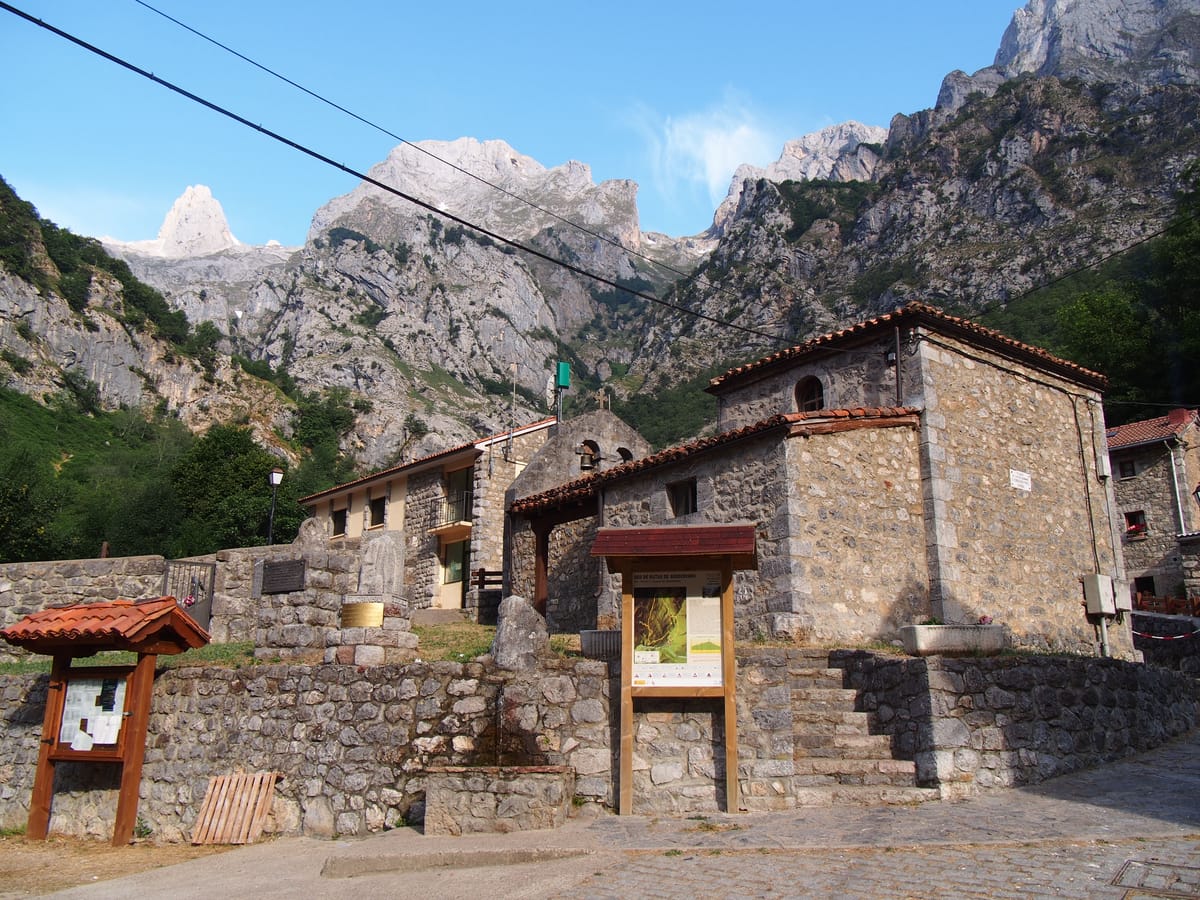
Caínrheins — CC BY 3.0 (Wikimedia Commons)

Caín

Village / Start

The León village where the path begins and where the channel's dam stands. The starting point of this variant, hemmed in by the gorge walls.

Tip

Since you go out and back the same way, there is no return transport to arrange: your car is waiting where you left it.

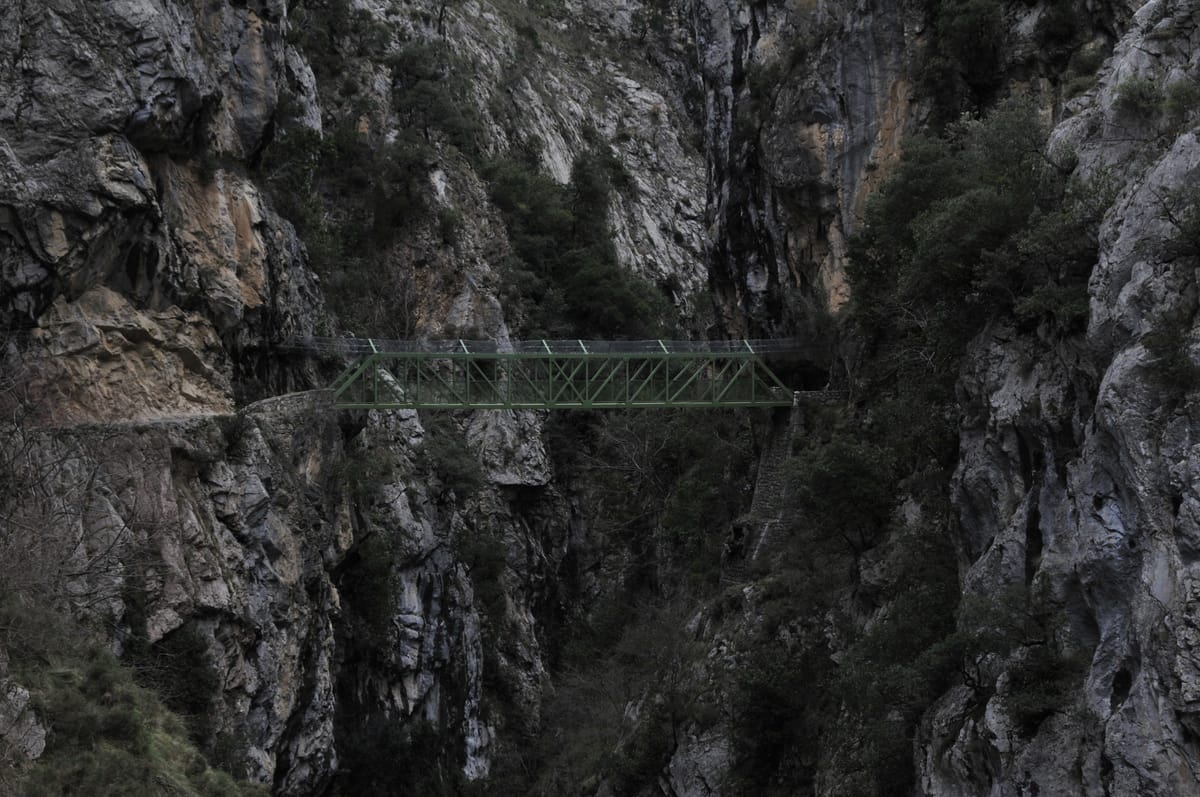
Rebecos and Bolín bridgesManuel Velazquez — CC BY 3.0 (Wikimedia Commons)

Rebecos and Bolín bridges

Heritage / Bridges

In the narrowest stretch, near Caín, the path crosses the Cares over two bridges in quick succession before entering the section of tunnels carved from the rock. They are among the most photographed spots in the gorge.

Tip

Coming from Caín, these bridges appear almost straight away: this is the most spectacular and the most accessible part of the whole route.

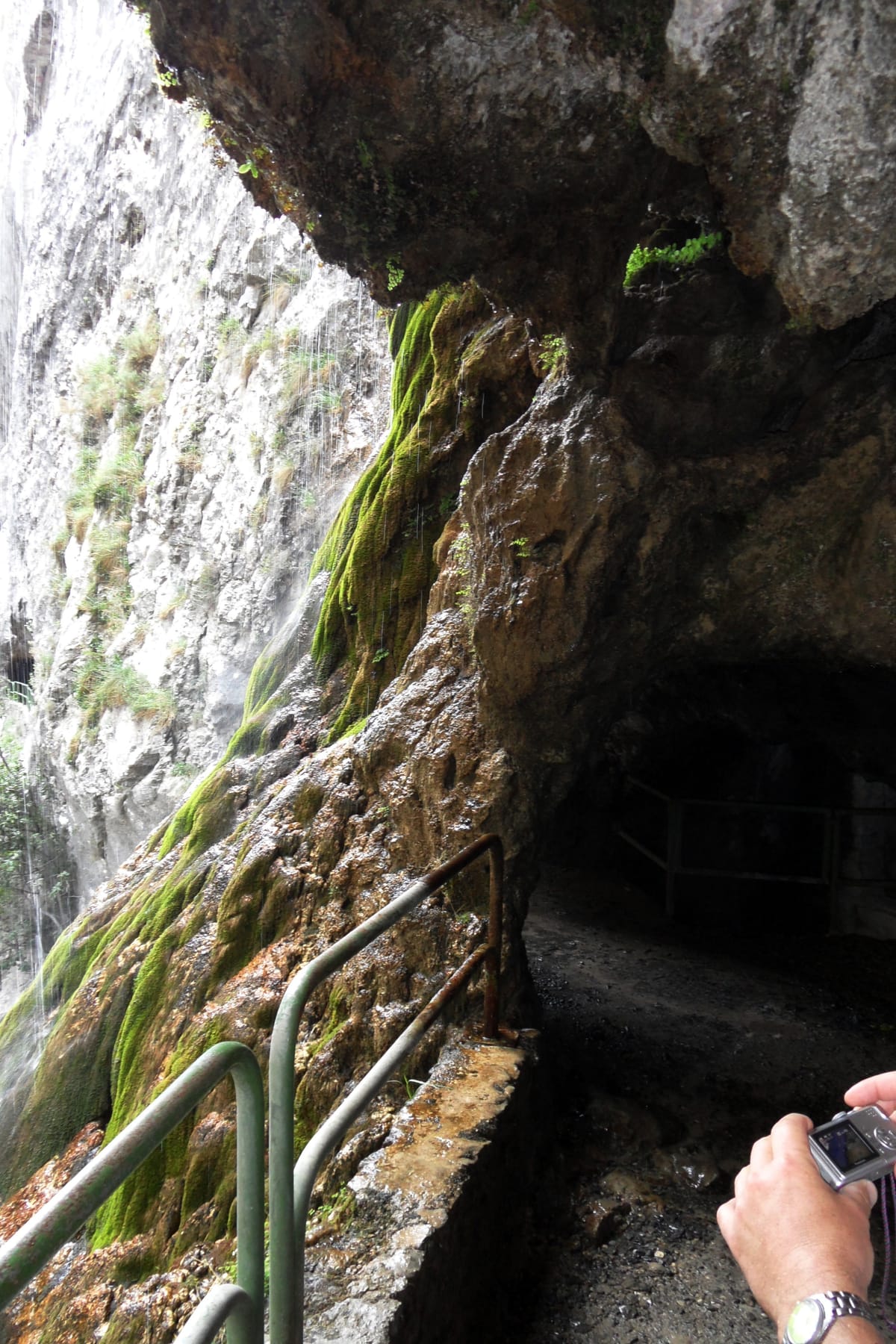
The tunnels and the Divine GorgeFalk2 — CC BY-SA 4.0 (Wikimedia Commons)

The tunnels and the Divine Gorge

Nature / Gorge

The heart of the route. The path runs halfway up the cliff, cut into near-vertical walls of grey limestone, high above the river. More than seventy tunnels and passages hewn from the rock follow one another as the gorge narrows.

Tip

This is where the path overhangs unprotected drops. Keep to the inside, don't lean out, and take particular care when passing others at the narrow points.

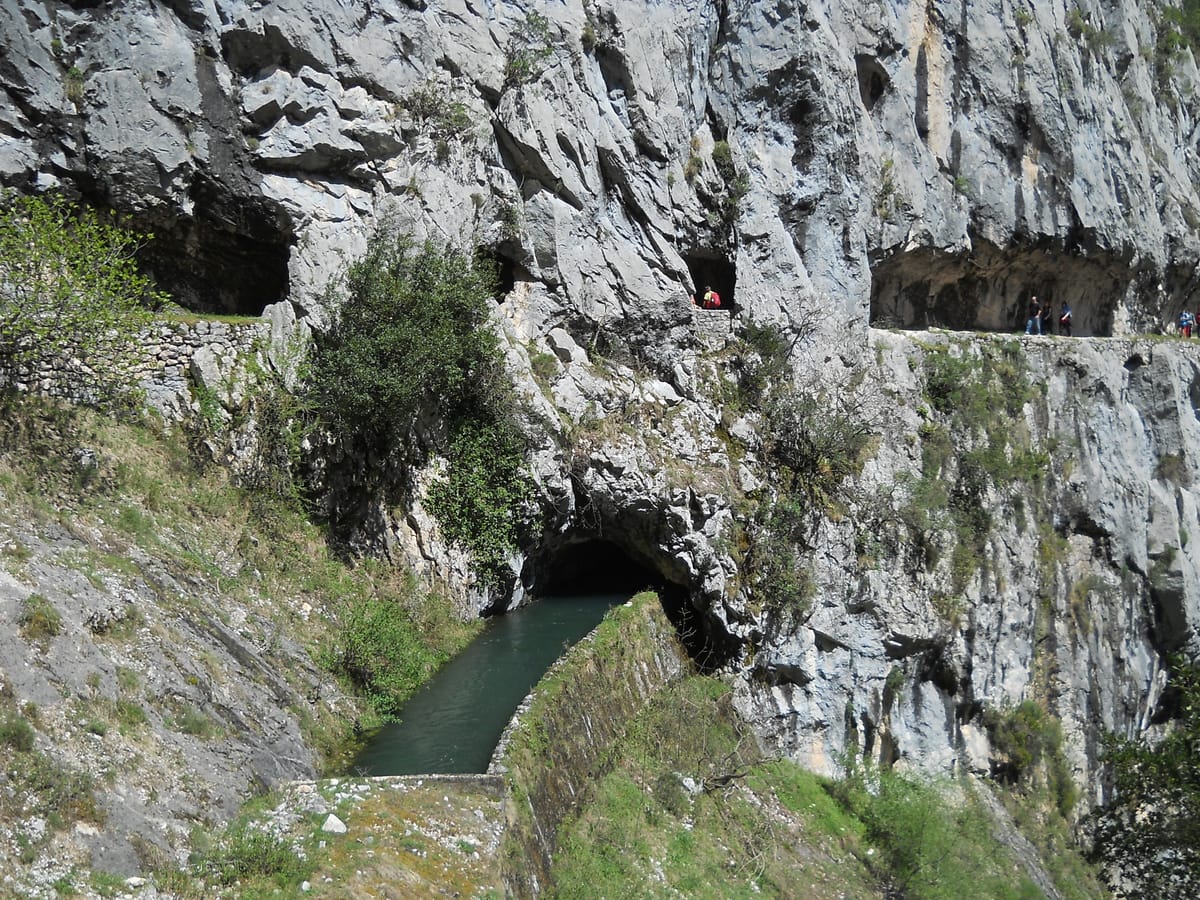
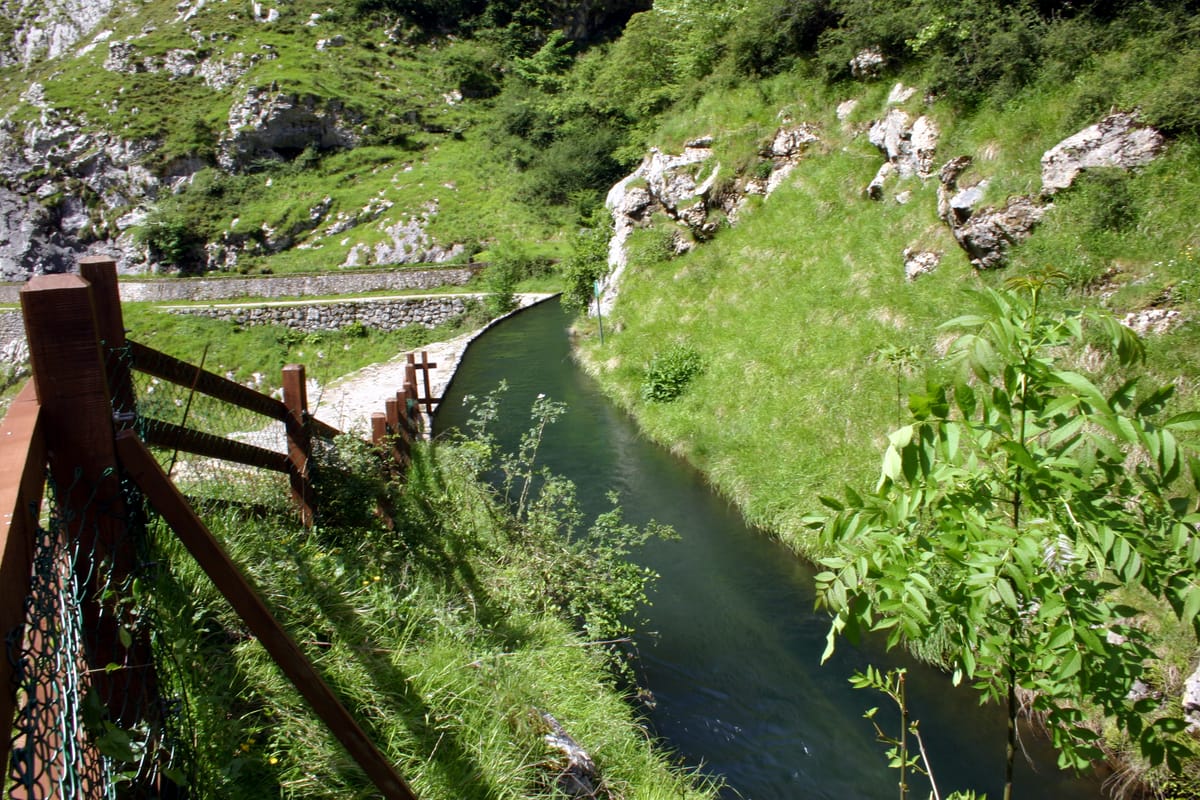
The Cares channelCruccone — CC BY 3.0 (Wikimedia Commons)

The Cares channel

History / Engineering

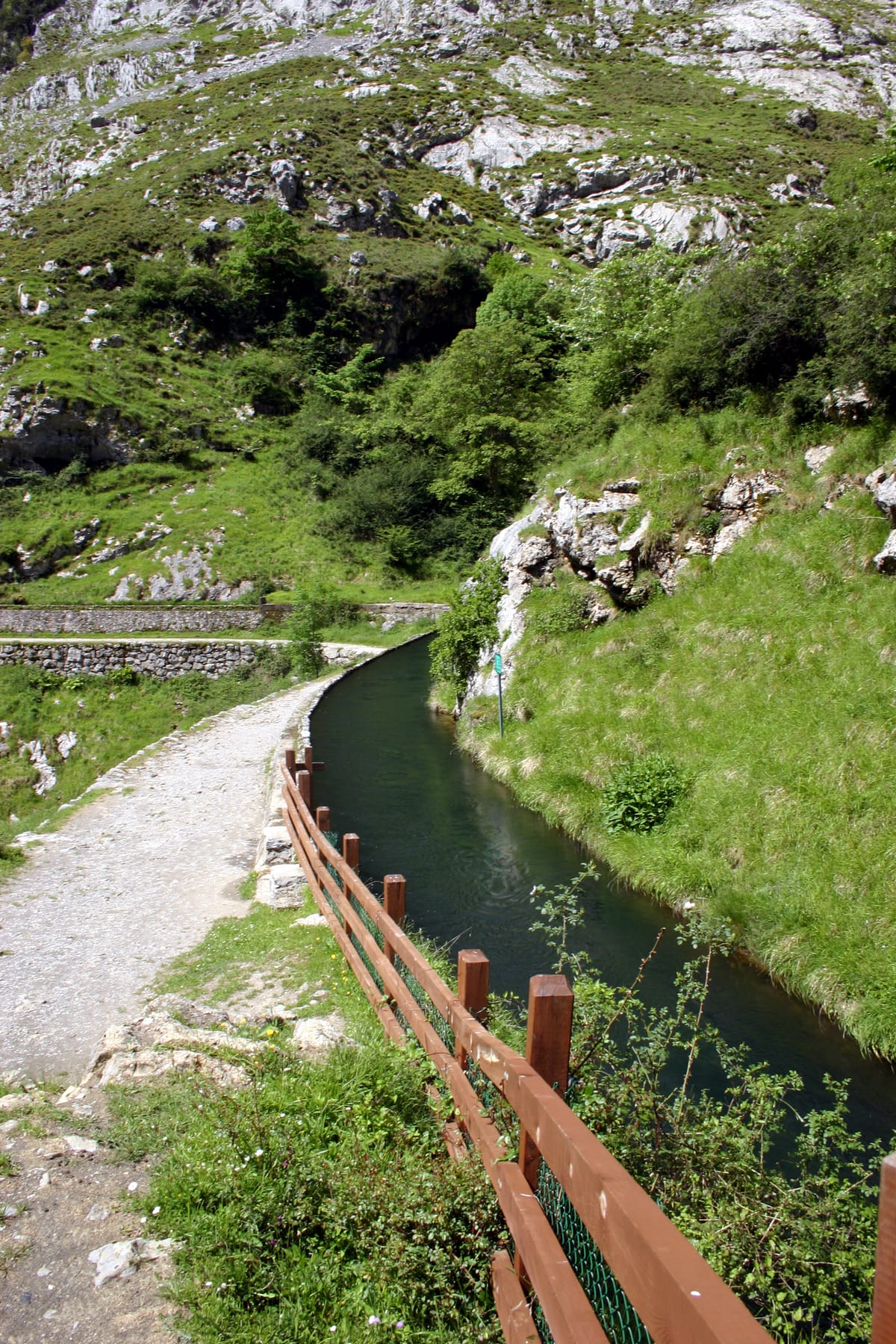
Between 1915 and 1921 the Sociedad Eléctrica de Viesgo cut eleven kilometres of channel to carry the waters of the Cares from Caín to the Poncebos power station. Seventy-one tunnels were bored by hand, more than 500 labourers worked on it and eleven lost their lives in accidents. The channel drops one metre every thousand: it surfaces and dives back into the rock again and again.

Tip

The path you are walking was born with the channel, though not as you see it: the original service track was cut during the 1915-1921 works, and between 1945 and 1950 it was widened to the two metres it has today. Spain's most famous route is, at heart, a service road.

Culiembro channelJCNazza — CC BY 3.0 (Wikimedia Commons)

Culiembro channel

Nature / Turning point

The point where many walkers setting out from Caín turn back: everything up to here is the most beautiful and narrowest part of the gorge, with its bridges and tunnels.

Tip

If you are doing the short version from Caín, this is your turning point. And if you are crossing all the way, you have already seen the best of it.

Start early and avoid August

Practical / Tip

This is the busiest path in the Picos de Europa. In summer and at weekends it fills up, which complicates both parking at Poncebos and passing other walkers at the narrow points.

Tip

Set off early and, if you can choose, avoid August and weekends. The route can also be walked the other way round, from Caín: flatter at the start and finishing with a steep descent to Poncebos.

Every stage is in the app, with its map and elevation profile, the points of interest with their tip, and the option to save them for when there is no signal.

Open in JourGuide

Other ways to do it