Home › Long-distance routes › GR-63 · Viriato Trail › 2 days · the best of the range

Heart of the Sierra2 daysOn foot© JourGuide

Heart of the Sierra

Navamorcuende → El Real de San Vicente

A two-day route designed to let you feel the sierra: it gathers the best of the GR-63 — the oak wood and Carmelite convent of El Piélago, the hilltop castle, the cave of the Holy Martyrs and the largest chestnut wood in Castilla-La Mancha — without walking the full 141 km. It does not follow the complete GR route and the second day includes a short stretch of road, so carry the downloaded track and follow local waymarking.

25 km2 stagesModerate+476 m / −497 mBest season: Primavera y otoño. En octubre y noviembre el castañar de El Real es espectacular.

Stage 1 · Navamorcuende → Hinojosa de San Vicente

9.3 km3.5 h3/5

The jewel of the sierra in a single day: the convent and snow wells of El Piélago, the oak wood, the hilltop castle, the cave of the Holy Martyrs and the descent to the village among mulberry trees.

Elevation profile

↑ 242 m ↓ 360 m

What to see

Carmelite Convent of El Piélago© JourGuide

Carmelite Convent of El Piélago

History / Convent

One of the most visited places in the range. A 17th-century convent of granite ashlar and rubble masonry where Carmelite friars led a contemplative life. The living quarters have been restored; the church fell into ruin when its vaults collapsed.

Tip

The descent to the convent is the one stretch where GR waymarking gets thin: keep an eye on the markers.

Snow wells of El PiélagoJourGuide

Snow wells of El Piélago

History / Rural heritage

Beside the convent, also 17th century. Snow was packed down here in layers alternating with straw so it could be cut into blocks and provide ice through the hot months.

Tip

One of the most curious corners of the range and easy to miss: look for the structures next to the convent.

El Piélago oak woodJourGuide

El Piélago oak wood

Nature / Woodland

A dense Pyrenean oak wood covering the high ridges and hills. It is the most characteristic forest of the Sierra de San Vicente and gives its name to the whole area.

Tip

In autumn the wood turns coppery: the best season for this stage.

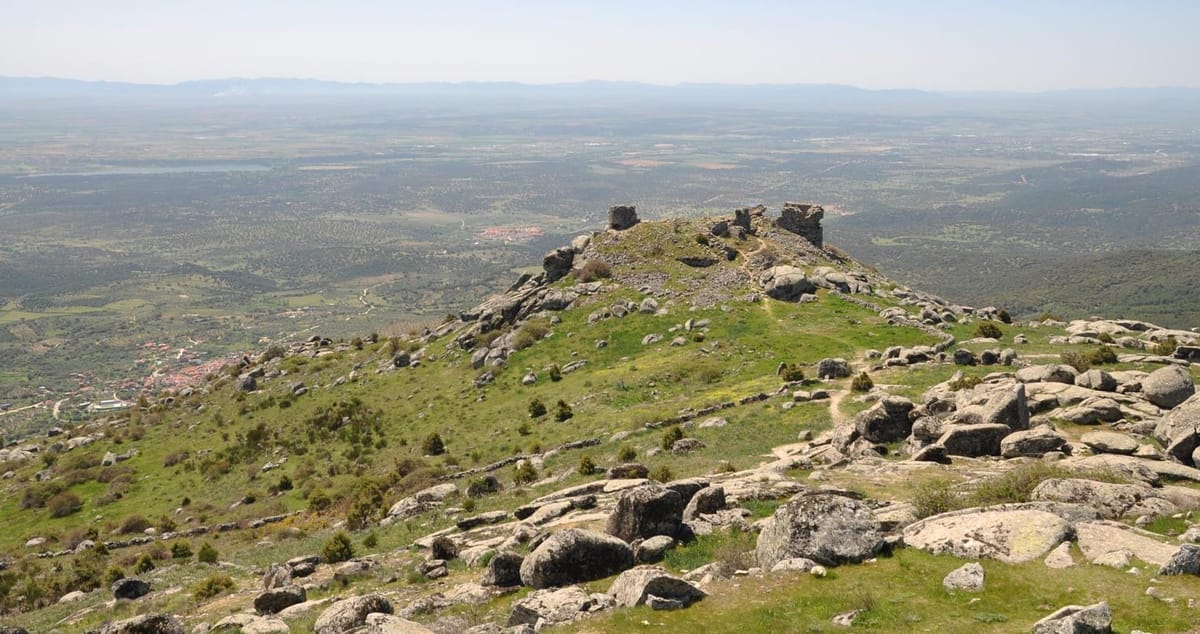
San Vicente CastleJourGuide

San Vicente Castle

History / Fortress

Built over a 10th-century Islamic watchtower guarding the range. In the 13th century Christians reinforced it with a great keep. Local tradition credits its construction to a Muslim leader it calls Miramamolín, hence the castle's other name; the dates do not fit the caliph al-Nasir who bore that nickname, so it is best taken as legend. Alfonso VIII camped here during the siege of Salvatierra. Listed as a Site of Cultural Interest.

Tip

It stands on the Cerro Testigo at 1,321 m: the visual roof of the comarca. On a clear day you can see the whole range, all of Gredos and the Alto Tiétar. The finest viewpoint on the route.

Chapel of the Holy MartyrsJourGuide

Chapel of the Holy Martyrs

Religion / Legend

Ruins of the best-known sanctuary in the range, above the cave where tradition says Vincent, Sabina and Christeta hid. They were three orphaned siblings from Talavera; the prefect Dacian arrested Vincent for being a Christian and his sisters helped him escape. They fled on horseback through these mountains, which have borne their name ever since. A small cave holds the footprints they are said to have left in the rock. Hagiography says they were caught outside Ávila, but in Hinojosa people say it happened right here, at El Piélago.

Tip

Only the perimeter wall survives, with doorways framed in monoliths, but the building once had three floors, an attic and a bell tower. Look for the cave of the footprints: it is the heart of the legend that names the whole range.

Santiago: the mulberry viewpoint

Nature / Viewpoint

At the top of Santiago stands a mulberry tree, one of those that for generations fed the village's silkworms. From its shade you can see the whole of Hinojosa and the El Piélago range.

Tip

Climb up and find the mulberry. It is no ordinary tree: it was planted to feed the silkworms, and it is still standing when nothing else of that industry remains.

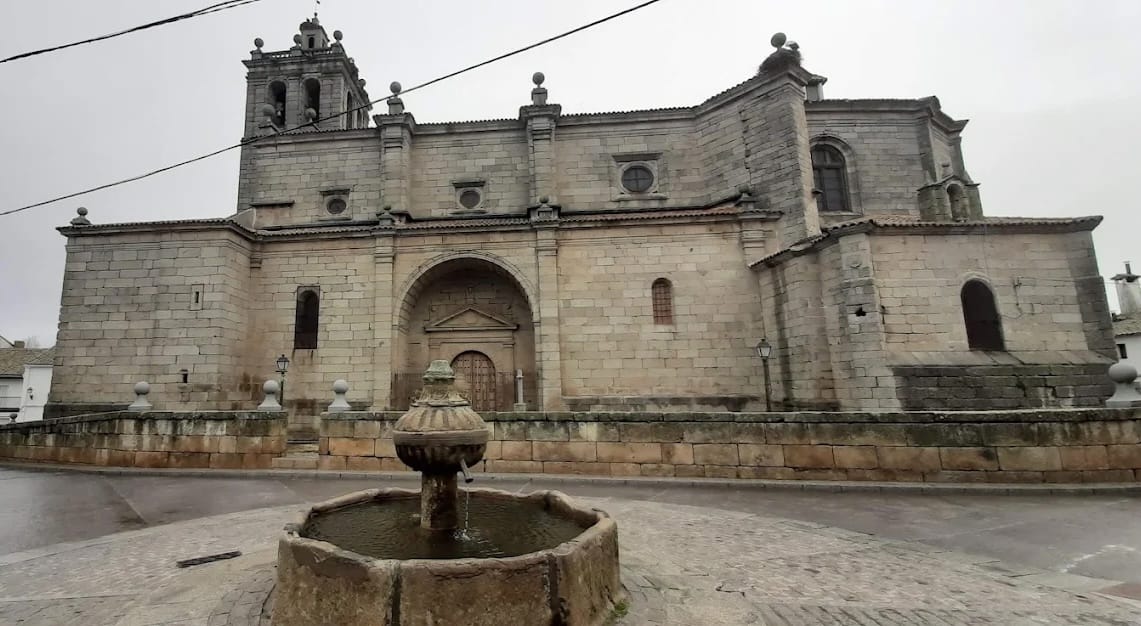
Caños DoradosJourGuide

Caños Dorados

Heritage / Fountains

Two historic spouts, part of the village's rural heritage. The 18th-century Caños Dorados stand in the church square; the Caño del Canuto, dated 1690, is some fifty metres away, with a lower and wider basin.

Tip

Two water points right in the village. The Canuto has been there since 1690: over three centuries watering people and livestock.

Church of La ConcepciónJourGuide

Church of La Concepción

Religion / Gothic

A Gothic single-nave church with a slender bell tower, in rubble and granite ashlar like the others in the range and in the diocese of Ávila these villages once belonged to. Note the stonework and a small dome on pendentives. The main altarpiece is 17th-century: a Baroque Immaculate Conception presides, and above it the carving of the Christ of Hope, the village patron. Some 150 graves lie beneath the nave flagstones.

Tip

Two details people miss: the 16th-century tile panel in the north porch, and two images — Saint Andrew Corsini and Saint Mary Magdalene de' Pazzi — that came from the Carmelite convent of El Piélago, the range you have just walked down from.

Stage 2 · Hinojosa de San Vicente → El Real de San Vicente

15 km4.5 h3/5

A second day along the top of the range: the largest chestnut wood in Castilla-La Mancha, the roof of the comarca, and arrival in El Real de San Vicente, a mountain village of steep streets.

Elevation profile

↑ 234 m ↓ 137 m

What to see

El Real de San Vicente chestnut wood

Nature / Woodland

The largest chestnut wood in Castilla-La Mancha, on the slope above the village.

Tip

October and November are the best time of year: the ground fills with husks and the light among the chestnut trees is worth the trip.

Alto de los Pelados

Nature / Summit

At about 1,332 metres, the highest point on the route and its second pass.

Tip

The climb is the hardest stretch of the day: save some energy for it.

Silk in El Real de San Vicente

Culture / Crafts

Silkworms were raised here too. For generations the whole Sierra de San Vicente worked as a factory spread across its houses: mulberry trees were planted in the meadows, beside the springs and along field boundaries, and in every home a whole room — the troje — was given over to worms fed on that leaf. Sacks of cocoons were gathered daily and carried down to Talavera, thirty kilometres away, on packhorses.

Tip

Look for the old mulberry trees along field boundaries and near the springs: they were planted to feed the silkworms and are still standing when nothing else of that industry remains.

Parish church of Santa Catalina

Religion / Heritage site

Listed as a Site of Cultural Interest in 1991. A 16th-18th century building whose interior holds a chapel with two tiled dados that break the plainness of the church.

Tip

Step inside to see the chapel's tiled dados: they are what gives the church its character.

Veneruelas fountain

Heritage / Fountain

A three-spouted fountain with a trough, beside the old washing place. Vernacular architecture tied to the daily life of the village.

Tip

El Real is a mountain village of steep streets: take it slowly as you walk around.

El Real's Calvary at Easter

Culture / Traditions

At Easter, El Real de San Vicente stages the Passion at its calvary: a re-enactment of the life and death of Jesus performed by the villagers themselves. El Real also preserves folklore found nowhere else in the province, including the ribbon dance known as Tejetecordón and the Rondón.

Tip

If you visit the range at Easter, check the exact day with El Real town hall: the date changes every year.

Every stage is in the app, with its map and elevation profile, the points of interest with their tip, and the option to save them for when there is no signal.

Open in JourGuide

Other ways to do it