Home › Long-distance routes › Tajuña Greenway › 1 day by bike · 49 km, the Madrid section

Arganda → AmbiteOne dayBy bikeMalopez 21 — CC BY-SA 4.0 (Wikimedia Commons)

Arganda → Ambite

Arganda del Rey → Ambite

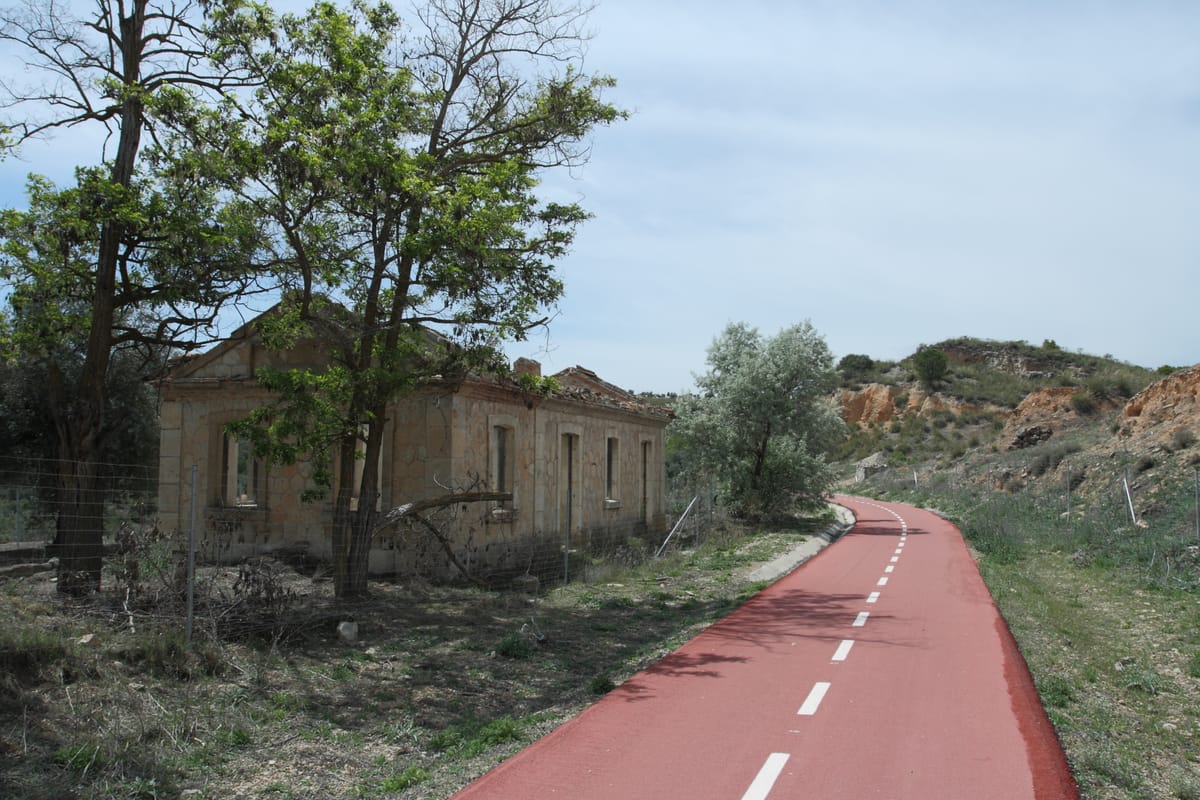
The full Madrid section: forty-nine kilometres from Arganda del Rey to Ambite following the Tajuña valley, on the red asphalt that identifies this greenway. Along the way, the historic train of La Poveda, the bench at Tielmes with the best views of the village at sunset, Chavarri station and the spa of the Waters of Carabaña, and the junction of the railway built in forty days during the Civil War. It ends at the old station of Ambite, today a swimming pool and café. Just two hundred metres of climb over forty-nine kilometres. Notes: the surface alternates red asphalt and compacted gravel. On the stretch between Morata and Perales there are sharp speed bumps and some sections shared with motor traffic: slow down there, especially with children. The route is linear, so you need to arrange the return; the advantage is that it starts two hundred metres from Arganda metro station, and bikes are allowed all day on Sundays and public holidays, and outside peak hours on other days. This is open countryside in south-eastern Madrid: there is little shade, so carry water. Check the state of the route before setting out.

49 km1 stagesModerate+216 m / −174 mBest season: Otoño y primavera. En verano la campiña del sureste madrileño es muy calurosa y no hay apenas sombra; en invierno se puede hacer perfectamente, aunque amanece tarde.

Stage 1 · Arganda del Rey → Ambite

49 km4 h1/5

A bike ride from Arganda del Rey to Ambite along the greenway, via Morata, Tielmes, Chavarri station and Carabaña.

Elevation profile

↑ 216 m ↓ 174 m

What to see

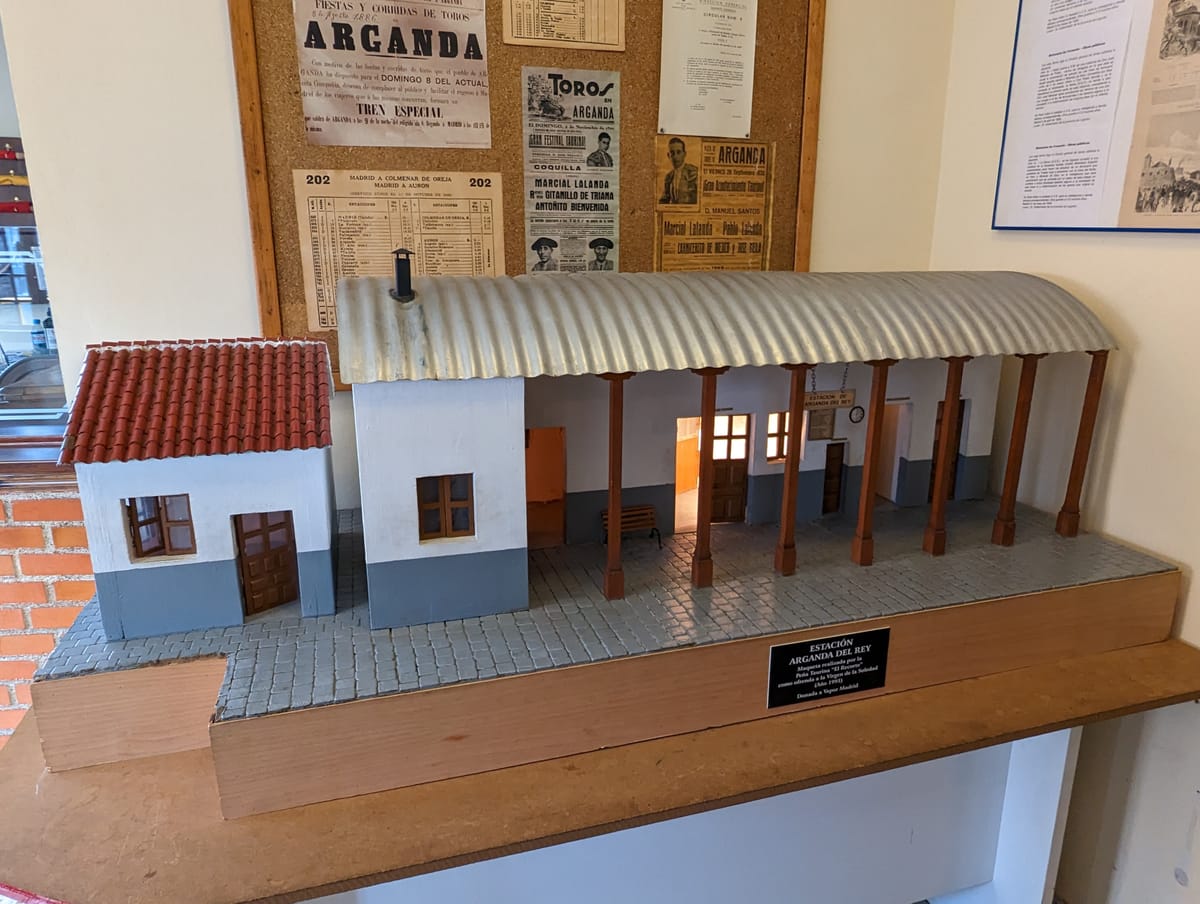
La Poveda and the Arganda trainStartRodelar — CC BY-SA 4.0 (Wikimedia Commons)

La Poveda and the Arganda train

History / Railway

The route starts two hundred metres from the metro station, on Avenida del Ejército, on the very trackbed used by the old Tajuña railway. At La Poveda, the Vapor Madrid association and the town council have restored six kilometres of line where a historic train with century-old wooden carriages runs, and there is a railway museum.

Tip

'The Arganda train, which whistles more than it moves' was the local saying. The historic train runs on Sundays from March to May and from October to December: check the calendar before you go. And bikes are allowed on the metro all day on Sundays and public holidays.
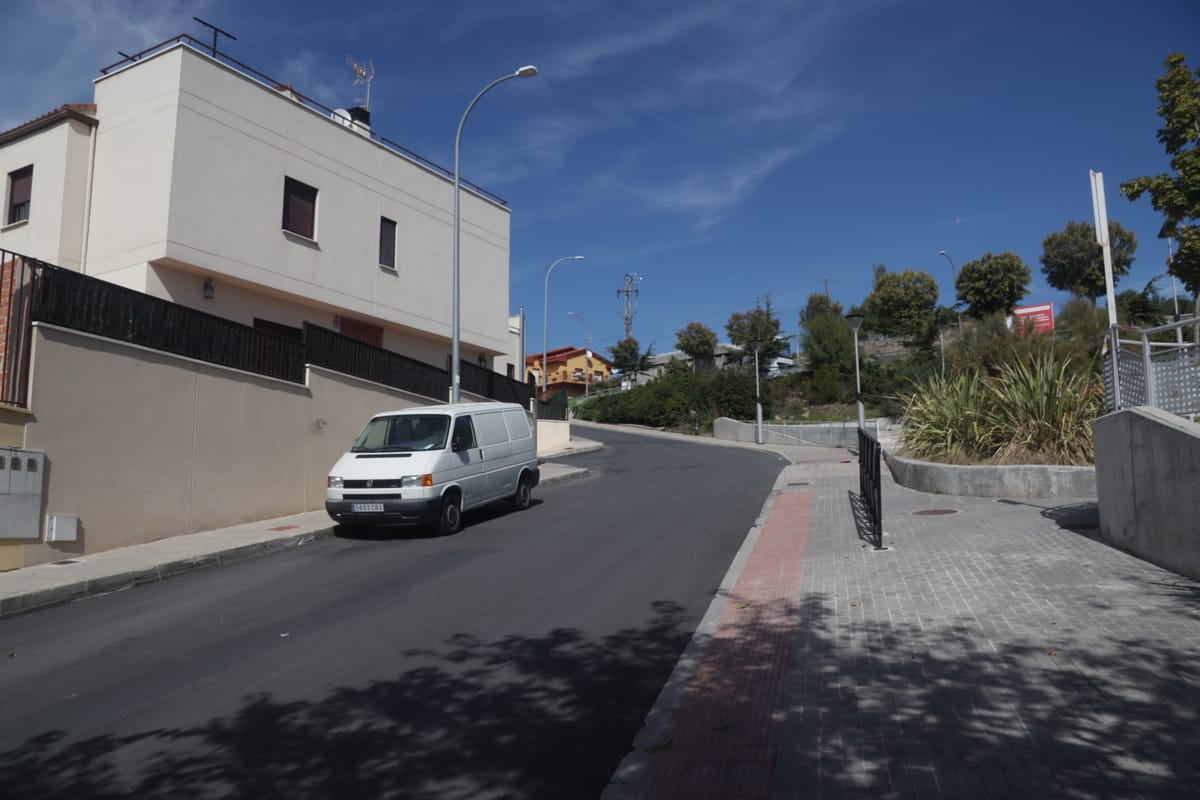
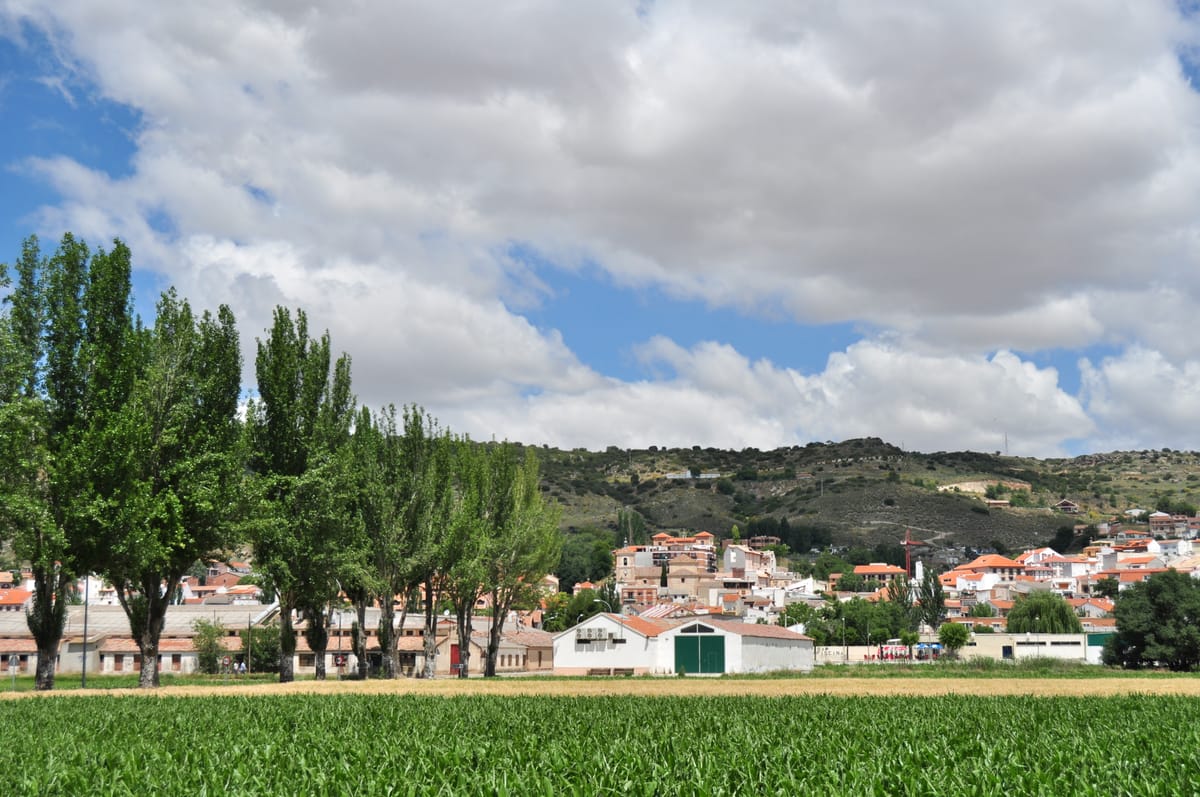
Morata de TajuñaJiří Sedláček — CC BY-SA 4.0 (Wikimedia Commons)

Morata de Tajuña

History / Industrial heritage

The first village of the valley, with an industrial past the greenway cuts straight through: Cornicabra station stands in its municipality, and the landscape alternates market gardens with the works that once employed the area.

Tip

The natural end of the short variant. From here you return to Arganda the same way or carry on towards Perales, though that stretch has sharp bumps and some sections shared with cars.

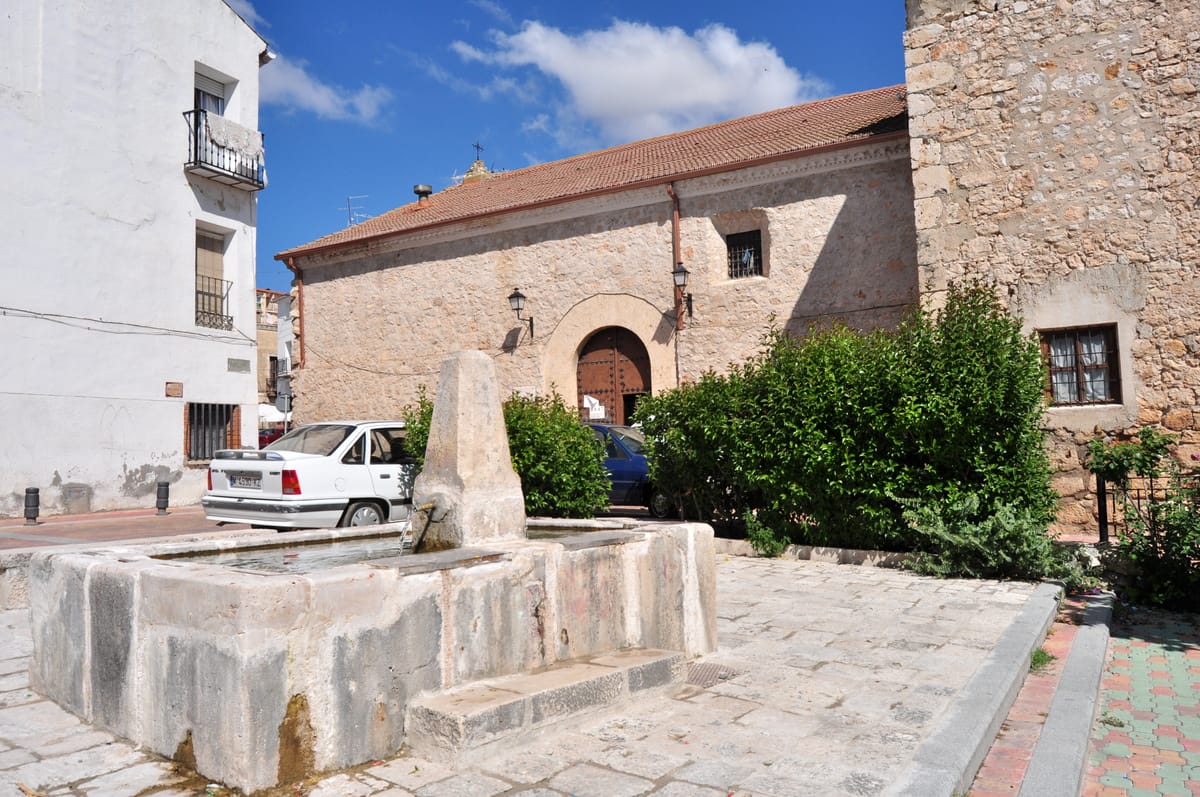
Tielmes and the sunset benchLuis Rogelio HM — CC BY-SA 2.0 (Wikimedia Commons)

Tielmes and the sunset bench

Heritage / Viewpoint

Past the village centre stands the small chapel of San Isidro and, beside it, a bench overlooking the village that locals claim is 'the most beautiful in the world'. Further on, the chapel of the Santos Niños.

Tip

If you come in the afternoon, stop here: the village at sunset from that bench justifies the pause.

Chavarri station and the Waters of Carabaña

History / Spa

A halt opened in 1910 when the railway was extended between Orusco and Tielmes, built to serve the spa and bottling plant of the Waters of Carabaña. In the late 19th century the entrepreneur Ruperto Jacinto Chavarri exploited the mineral waters rising from the Cerro Cabeza Gorda spring, and they went on to gain international fame. The spa still stands, along with the bottling plant — today a youth hostel — and the elegant Chávarri power station, raised on what had been a flour mill.

Tip

A train, a spa and a power station built around a spring: a whole 19th-century enterprise story in one kilometre of track.

CarabañaLuis Rogelio HM — CC BY-SA 2.0 (Wikimedia Commons)

Carabaña

Heritage / Old town

One of the oldest villages in the region. Two hundred metres from the centre, the road to Estremera crosses the Tajuña on a bridge rebuilt around 1765 over an earlier one. In the village you can see the chapel of Santa Lucía, the Plaza de España with its town hall, the church of Our Lady of the Assumption and some cave houses.

Tip

A good place for the long stop: there is a village, shade and somewhere to eat, right at the midpoint of the route.

The Forty Days Train

History / Civil War

At Carabaña the red asphalt splits: the right-hand lane is the start of the Forty Days Train Greenway, a railway built during the Civil War to supply a besieged Madrid: forty days was the deadline set, and the name that stuck, though getting it running took about a hundred. It was also known as the Negrín Line and was vital to the city's defence. Today it runs fourteen kilometres to Estremera, by way of Valdaracete.

Tip

The name comes from the deadline set for laying it; in practice it took about a hundred days. If you have time and legs to spare, the detour is short and the story is worth it.

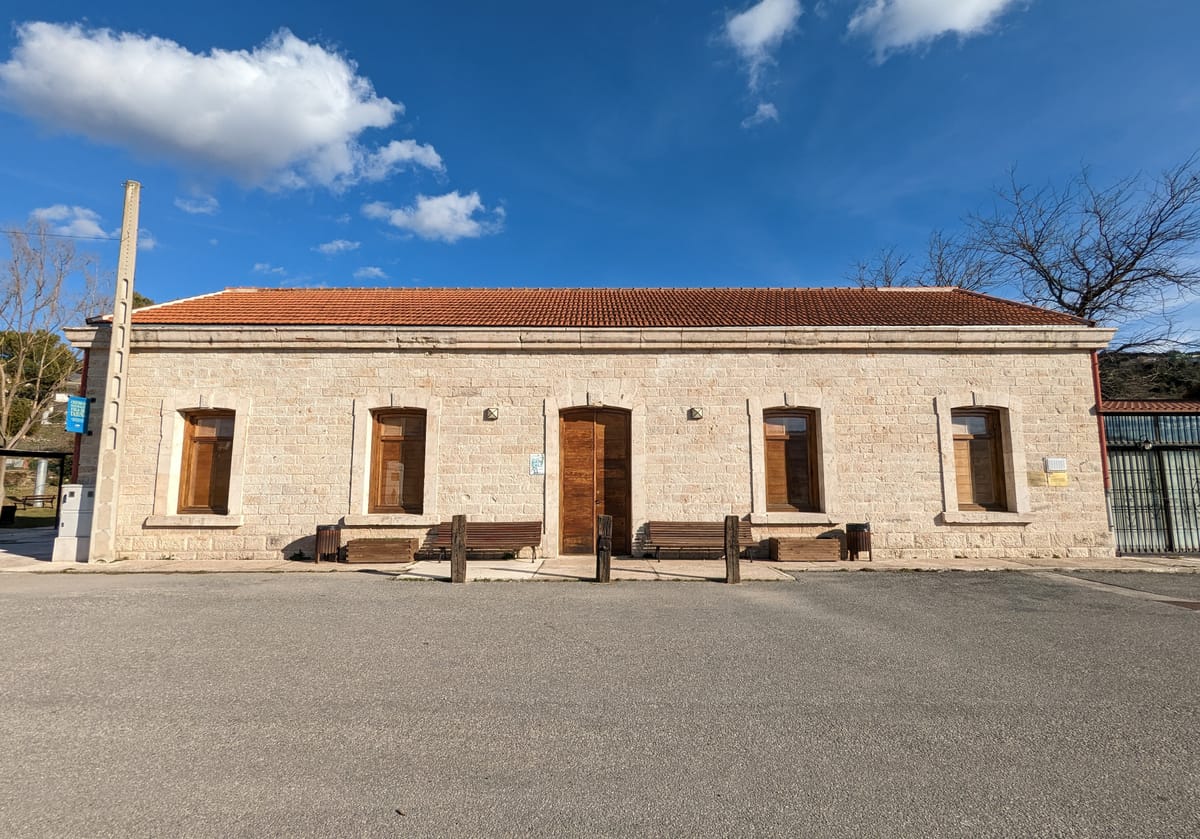
Ambite stationRodelar — CC BY-SA 4.0 (Wikimedia Commons)

Ambite station

Practical / End of section

The end of the Madrid section, on the border with Guadalajara. The old railway station has been turned into a swimming pool and café, which after forty-eight kilometres on a bike is more welcome than any monument.

Tip

This is where the medium variant ends. Anyone carrying on enters Guadalajara: another eighteen kilometres to Pozo de Almoguera.

Every stage is in the app, with its map and elevation profile, the points of interest with their tip, and the option to save them for when there is no signal.

Open in JourGuide

Other ways to do it