Home › Long-distance routes › Garganta de los Infiernos › Full day · 16 km circular

Garganta de los InfiernosOne dayOn footAlejandro Vallejo Ortega — CC BY-SA 4.0 (Wikimedia Commons)

Garganta de los Infiernos

Jerte

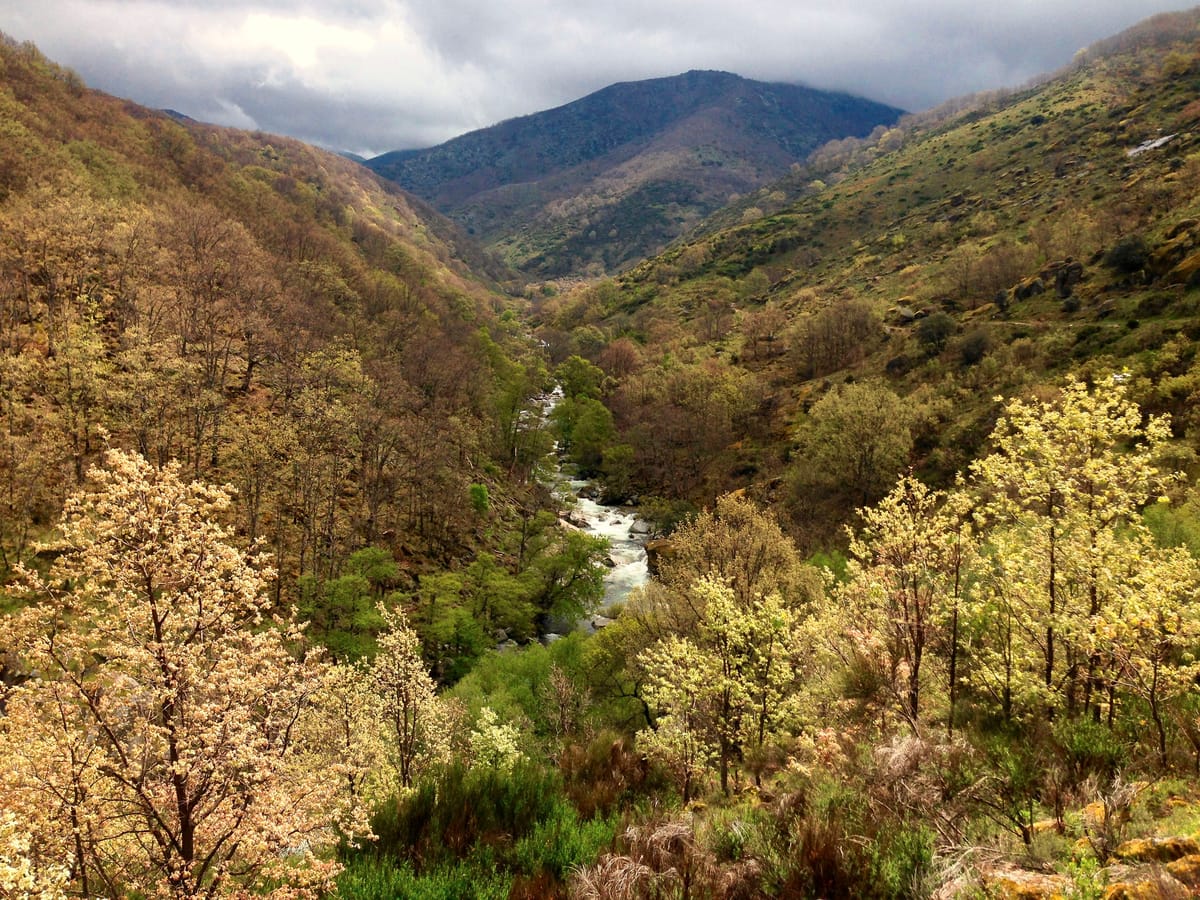
The full circuit of the Reserve: sixteen circular kilometres climbing beyond a thousand metres, taking in Los Pilones, the historic bridges of the upper section and the Collado de las Losas, with the finest panorama of the valley, before dropping through the chestnut wood of Monte Reboldo. A full day and genuine mountain ascent. Warnings: at Los Pilones the crossing is protected by railings and metal cables, but you have to walk over polished stone that is quite slippery even when dry. On parking: it is forbidden to park between the Jerte football pitch and the Valle del Jerte campsite, under penalty, and the car park by the N-110 roundabout charges a fee from mid-March to the end of October. Inside the Reserve motor vehicles are banned except for authorised operators, dogs must be kept on a lead at all times, and you may not gather fruit or cut branches from yew, holly or birch, which are protected botanical relics.

16 km1 stagesModerate+664 m / −578 mBest season: Primavera, cuando florecen los cerezos del Jerte y el valle entero se vuelve blanco. El verano es poco caluroso y bueno para las pozas, aunque se masifica. En invierno hay nieve en las cumbres y llueve mucho.Circular

Stage 1 · Jerte → Jerte

16 km6 h3/5

The full loop through the Reserve: Los Pilones, the historic bridges of the upper section, the Collado de las Losas and a descent through the chestnut wood of Monte Reboldo.

Elevation profile

↑ 664 m ↓ 578 m

What to see

Interpretation centres

Culture / Visitor centre

The Reserve has interpretation centres for Fauna and Flora and for Water, plus the Jerte Salmonid Breeding Centre. They are the best introduction to what you are about to see, especially with children. The route starts here, between Jerte and Cabezuela del Valle.

Tip

Start here before you walk: understanding why the water has shaped the rock this way changes what you see at Los Pilones.
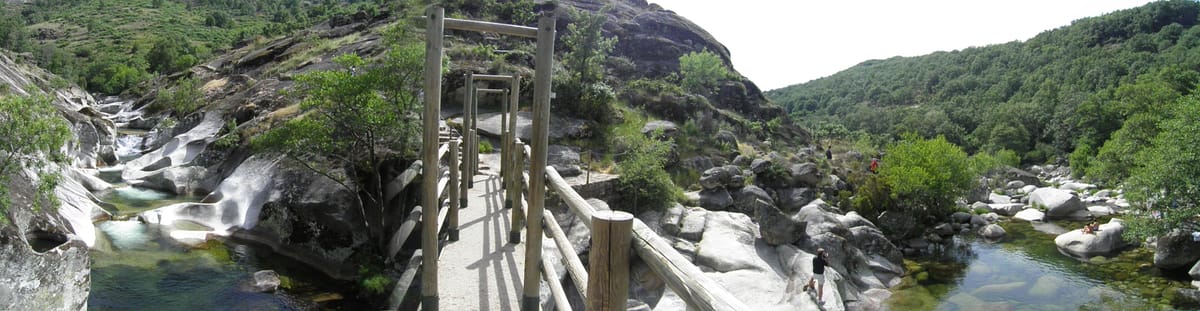
Los PilonesVictoria mayo — CC BY-SA 3.0 es (Wikimedia Commons)

Los Pilones

Nature / Giant potholes

The heart of the route and the image everyone knows of the Jerte. These are giant potholes: large circular pools carved into the rock by water erosion over thousands of years, strung one after another along the granite bed.

Tip

The crossing is protected by railings and metal cables, but you walk over polished stone that is slippery even when dry: tread carefully and keep an eye on children. It gets very busy in summer, so start early.

Puente Nuevo, or Charles V bridge

Heritage / Bridge

At 880 metres, this bridge forms part of the historic path along which, by tradition, Emperor Charles V travelled towards his retirement at Yuste. The upper section of the route also strings together the Sacristán bridge, the Carrascal bridge and the Zarzalones shepherds' huts.

Tip

From the Collado de las Losas, at 965 metres, opens the finest panorama of the whole valley. And the final descent runs through Monte Reboldo, a chestnut wood.

Garganta de la Serrá

Nature / Glacial valley

An ancient glacial valley shaped by Quaternary ice, ringed by the Reserve's highest ground: the Cuerda de los Infiernillos (2,281 m) and the Cerro del Estecillo (2,290 m). Its upper reaches hold alpine mat-grass pastures with gentians, false helleborine and mountain saffron.

Tip

In the waterlogged flushes grows the sundew, a tiny carnivorous plant. Crouch down and look for it: it is one of the rarities here.

The four vegetation belts

Nature / Botany

From 600 to 2,000 metres the landscape changes completely. Down low, Pyrenean oak woods with ferns and orchids in the understorey, and on the sunny slopes the cherry trees that give the valley its name and its wealth. By the water, riverside woods of alder, ash and willow, with yew, holly and birch that are true botanical relics here. Higher up, alpine grassland. And where trees no longer grow, the mountain broom scrub, cushion-shaped and cold-adapted.

Tip

Come in spring and the Jerte cherry blossom is a spectacle in itself. And the understorey of the oak wood hides several species of wild orchid.

The Reserve's wildlife

Nature / Fauna

In the water the brown trout rules, and the dipper plunges under to catch insects. In the oak wood the jay calls out, along with orioles, hoopoes and azure-winged magpies. Griffon vultures and eagle owls shelter in the crags, while golden and short-toed eagles reign over the summits. Among the mammals there are notable rarities: wildcats, genets, otters, the Iberian ibex — which comes down to the woods in winter — and the desman, a tiny aquatic mammal almost nobody gets to see.

Tip

The stag beetle, large and striking, is one of the easiest invertebrates to spot. And if you see a black stork, count yourself lucky: they are getting scarcer here.

Every stage is in the app, with its map and elevation profile, the points of interest with their tip, and the option to save them for when there is no signal.

Open in JourGuide

Other ways to do it