Home › Long-distance routes › Río Lobos Canyon › Half a day · 2.5 km loop

Ermita de San BartoloméOne dayOn footVcarceler — CC BY-SA 3.0 (Wikimedia Commons)

Ermita de San Bartolomé

Ucero

The easiest route in the park and the most visited: two and a half circular kilometres, flat, from the last car park to the Templar hermitage of San Bartolomé. That single kilometre holds the essence of the canyon: the 13th-century hermitage, the Cueva Grande at whose mouth it stands, and the Balconcillo, the viewpoint that looks down on it. Ideal with children or with anyone unused to walking. Notes: the Balconcillo, the viewpoint reached from the hermitage by a path of some 200 metres, is not signposted and the climb calls for care. The Cueva Grande can be visited freely, but the Galiana cave requires going with an authorised operator. The hermitage interior opens for a one-euro ticket paid in cash to the attendant. In summer the riverbed stretch to the hermitage gets crowded: start early or choose the Senda de las Gullurías. Check conditions and access on the Natural Park website before setting out.

2.5 km1 stagesModerateBest season: Primavera y otoño. En verano el tramo del cauce se masifica y hace calor; en invierno el cañón tiene otro encanto, más solitario, aunque puede haber hielo en las sendas altas.Circular

Stage 1 · Ucero → Ucero

2.5 km1 h1/5

A short loop from the canyon's last car park to the hermitage of San Bartolomé, the Cueva Grande and the Balconcillo.

What to see

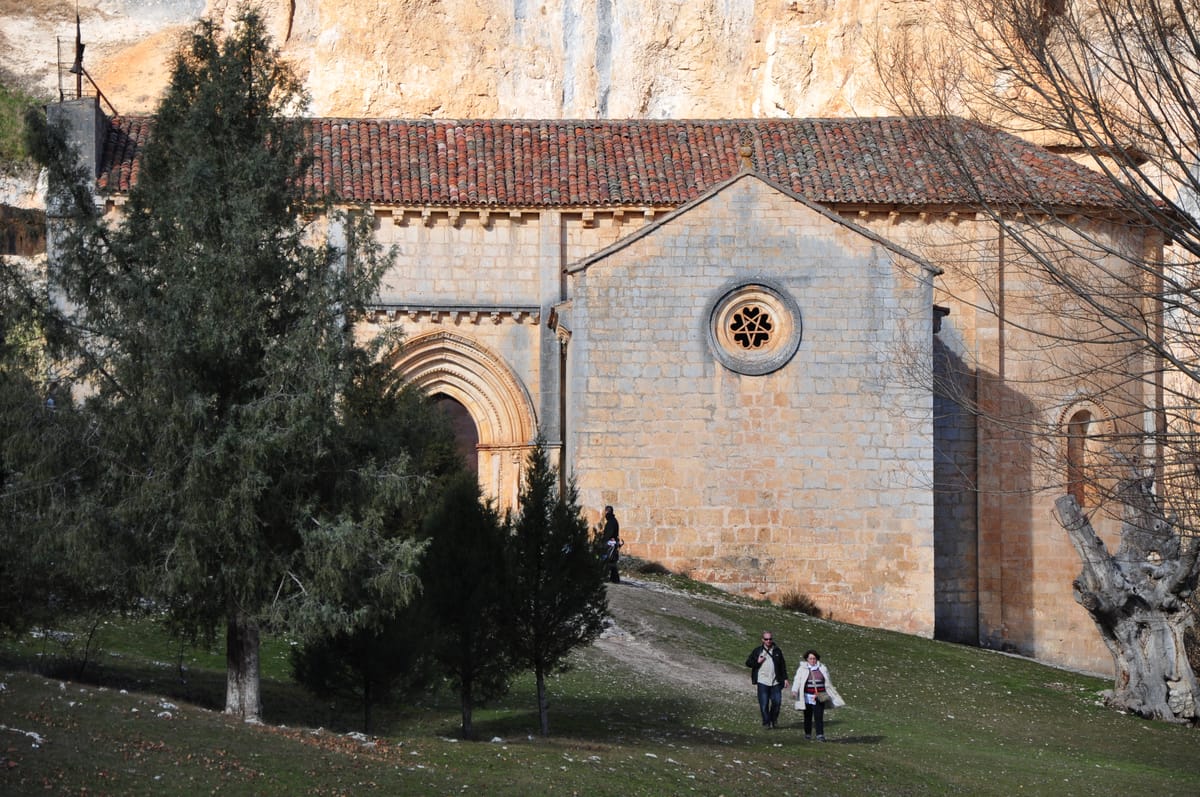
Hermitage of San BartoloméStartWamba Wambez — CC BY-SA 3.0 (Wikimedia Commons)

Hermitage of San Bartolomé

Religion / Templar Romanesque

The most photographed spot in the canyon: a 13th-century Romanesque hermitage attributed to the Templars, standing on a green clearing right at the mouth of the Cueva Grande. A much-repeated tradition traces the river's name to the Celtic god Lug, linked to the wolf, though it is not documented. The site is said to have hosted pagan worship before the hermitage, though there is no archaeological evidence.

Tip

The interior is visited with a one-euro ticket paid in cash to the attendant. It is worth going in: the Romanesque iconography is among the most singular in Castile.
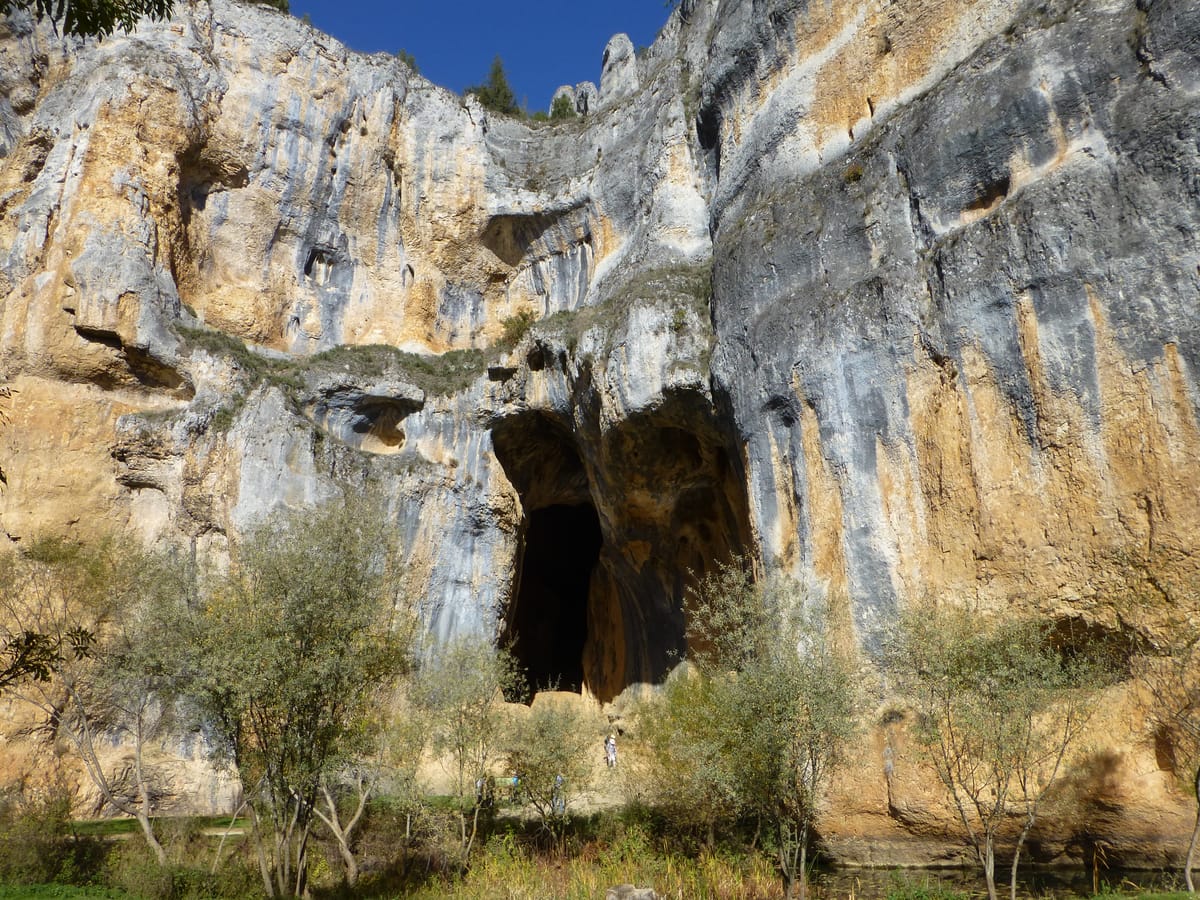
The Cueva GrandeTriedros — CC BY-SA 4.0 (Wikimedia Commons)

The Cueva Grande

Nature / Cave

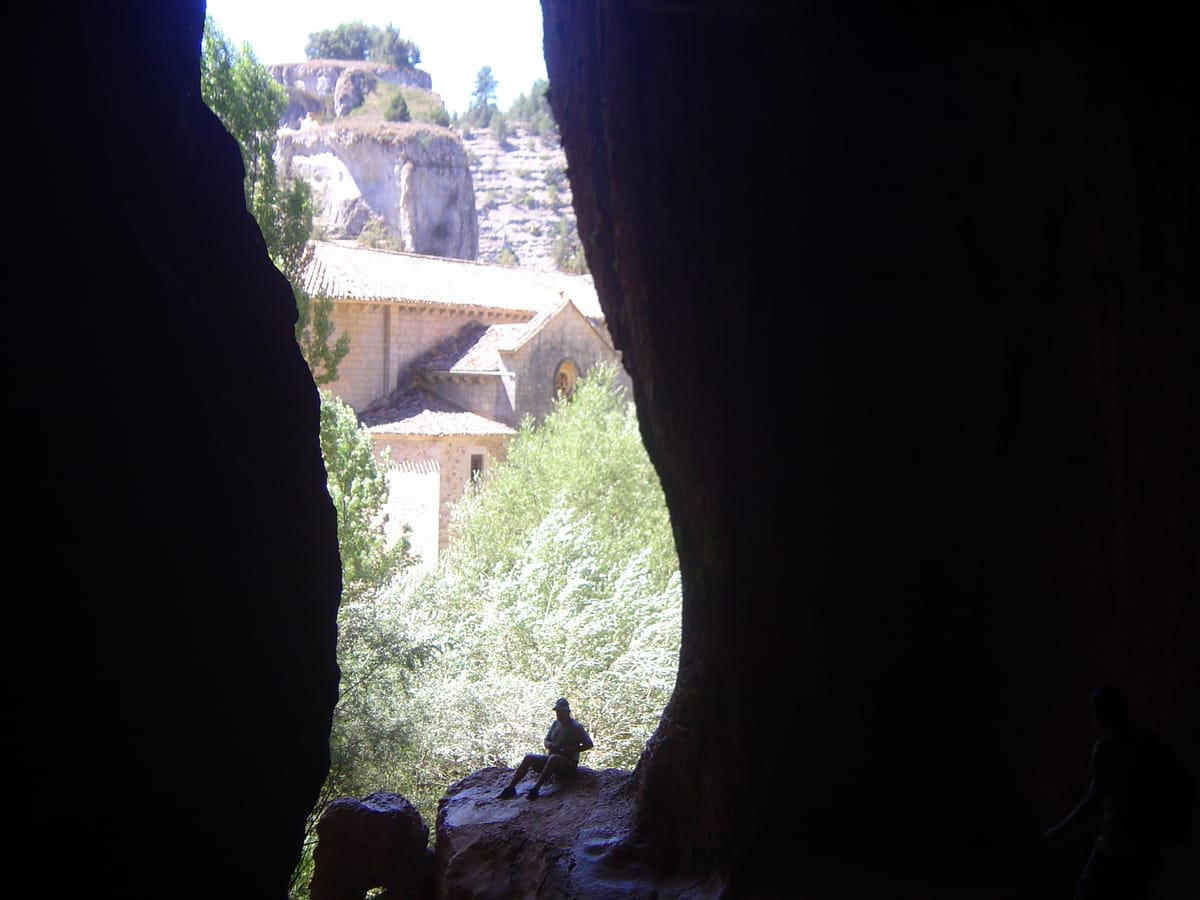
A cave over a hundred metres deep that opens right behind the hermitage. Tradition points to it as the ancestral site that gave meaning to everything else, with rites predating the Romanesque, though this is not documented.

Tip

Step a few metres in and turn around: the classic photo is the hermitage framed by the cave mouth.

El Balconcillo

Nature / Viewpoint

The most spectacular viewpoint in the canyon, reached by a path of barely two hundred metres leaving from beside the hermitage. From up there you take in the whole meander and the limestone walls at once.

Tip

It is not signposted and the climb is steep: wear proper footwear and take care, especially with children. It pays off.

The griffon vultures

Nature / Wildlife

They are the park's most abundant species and wheel above the canyon along the whole route. With luck you may also see golden and short-toed eagles, falcons and kites, and on the ground roe deer, squirrels and hares.

Tip

Look up now and then: the canyon walls are their breeding site and they usually glide at rim height.

Every stage is in the app, with its map and elevation profile, the points of interest with their tip, and the option to save them for when there is no signal.

Open in JourGuide

Other ways to do it